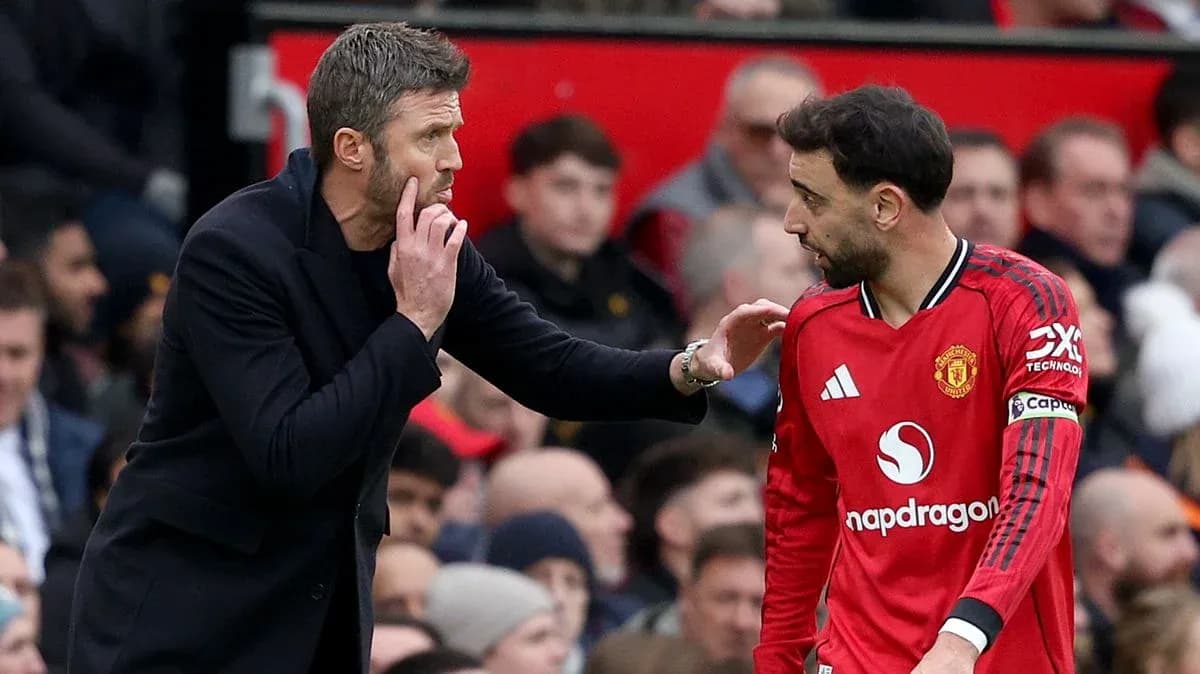
Bruno Fernandes: Manchester United's Iron Man and His Future
Bruno Fernandes has been Manchester United’s ever-present heartbeat since the day he walked in from Sporting Lisbon. Six years on, the numbers are staggering: 27,863 minutes in red, with only a select group of players across Europe’s top five leagues – many of them goalkeepers – spending more time on the pitch in that span.
He has barely missed a game. He barely wants to.
But he turns 32 next month. Even for someone who seems to run on pure competitive fury, there is a limit. Michael Carrick knows it. United know it. If they want Fernandes to keep driving this team, they can’t keep running him into the ground.
United’s Iron Man Meets the Clock
The captain’s durability has become part of his legend at Old Trafford. He plays, he creates, he leads. Then he does it again three days later.
United have leaned on that reliability to an unhealthy degree. Fernandes has been the solution to almost everything: creativity, leadership, intensity, standards. When United wobble, he grabs the game, demands the ball, drags the tempo up a notch.
That obsession with playing never really switches off. On the final day of last season, with Brighton beaten and the job done, Carrick revealed that Fernandes had still asked to stay on for the full 90. He had already broken the assist record. He still wanted more.
This is a footballer who lives in the game. When United are away, he’ll sit in the team hotel watching academy matches. If there’s a ball and a screen, he’s locked in. Rest is an inconvenience, not a strategy.
Next season, it has to become one.
Carrick’s Balancing Act
Carrick understands exactly what he has on his hands. “He's been a big part of the team and the club over recent times and had a huge impact, so he'll continue to do that,” he said on Thursday.
The challenge is not about belief in Fernandes. It’s about restraint.
“In terms of the games and how it comes, hopefully he stays fit and he's in good shape,” Carrick added. “But yeah, there's the element talking about the squad and the depth, and as we go through the season and the waves and the momentum and keeping the boys in good form, but keeping them fresh as well.
“So Bruno's part of that, you know. He's a big player for us, he's obviously our captain, but there's still elements where we need to look after him.”
That last line is the key. United’s captain is desperate to play every minute. Carrick must be willing to say no.
The Engine Room That Connects Everything
If this were a centre-back or a winger, the decision might be easier. Fernandes operates in the zone Carrick calls the team’s “connection” point – the area that links defence to attack, structure to chaos.
“You could argue both ends of the pitch are more important, if not more important,” Carrick said, “but the midfield connects the whole team together and has a big say on how the team performs with and without the ball.
“I think it gives you the foundation of the team, you know. I think the foundation of the team is important to be consistent, to be consistent through one game from start to finish, to be consistent over a period of time.
“I think you need a solid foundation through the middle of the team, trying to put it together, and getting that balance. But certainly, I think if you look at all the top teams over the years, all the great teams over the years, the spine of the team is really strong, you know.
“So we're conscious of that, and I think we've got a good spine of the team right now. We can keep improving as we go in different ways and coaching and helping the boys and developing them, and I think we're in a good place.”
That spine, though, has been propped up by one man for too long. When Fernandes plays, United look connected. When he doesn’t, they often look lost. Carrick’s task is to change that without losing what makes his captain so influential.
Learning to Win Without Him
For the first time in years, there is at least the promise of help. If United can complete a deal for Carlos Baleba, the midfield suddenly looks deeper, more athletic, and far less dependent on one man’s legs and imagination.
United have already added quality in that area. The idea is simple: share the load. Let others take responsibility for progressing the ball, for pressing, for making those late runs and brave passes that have become Fernandes’ trademark.
That doesn’t mean shrinking his role. It means protecting it.
Fernandes will not like being told to sit out. He will argue, he will push, he will insist he can go again. Carrick will need to put an arm around his captain and point to the bigger picture: more years at the top, more defining games, more moments that matter.
United have been overreliant on their captain since the day he arrived. The next phase under Carrick depends on something they have rarely managed in the Bruno era.
Winning when he is not on the pitch.