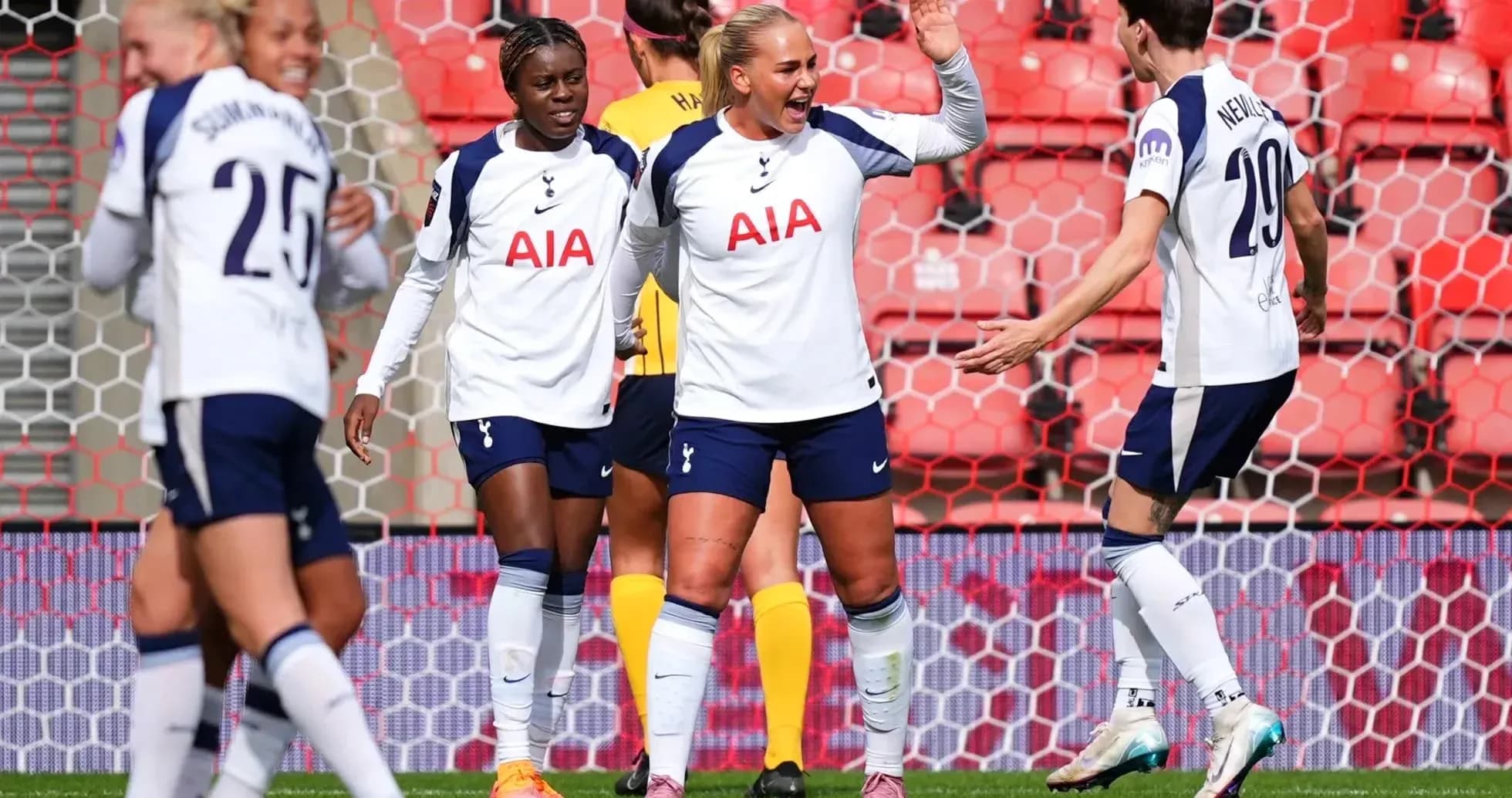
Brighton W vs Tottenham Hotspur W: FA WSL Clash Preview
Amex Stadium hosts a mid-table FA WSL clash on 16 May 2026 as Brighton W welcome Tottenham Hotspur W in the final stretch of the 2025 season. Fifth hosts sixth in effect, with Spurs on 33 points and Brighton on 26; there is no 1/4 final at stake here, but there is clear jeopardy in terms of league positioning, prize money and momentum heading into the off-season.
Context and stakes
In the league, Tottenham sit 5th with 33 points from 21 matches (10W-3D-8L, goal difference -4), while Brighton are 6th on 26 points (7W-5D-9L, goal difference 0). There is a seven-point gap between them, but Brighton’s recent form suggests this is closer than the table alone implies.
Brighton’s form line in the standings reads “DDWWD” – unbeaten in five in the league. Across all phases, their longer form string confirms a side that has stabilised after a patchy mid-season run: DLWWLLLDWWLLWLLLDWWDD. At home they have been solid if not spectacular: 4 wins, 3 draws and 3 defeats from 10, scoring 16 and conceding 13.
Tottenham arrive in a more fragile moment. Their standings form is “WDLLL” – just four points from the last five league games – even if across all phases the broader pattern (WWLWWLWLDWDWLWLWLLLDW) shows a team capable of putting together winning streaks. Away from home they are volatile but dangerous: 4 wins, 1 draw and 5 defeats from 10, with 22 goals scored and 25 conceded. That away scoring rate (2.2 goals per game) is one of the most eye-catching numbers in the division, but so is the 2.5 goals conceded per away game.
With no injuries or suspensions listed in the data, both coaches should have close to full squads available for selection.
Tactical outlook: Brighton’s structure vs Spurs’ chaos
Brighton’s season statistics suggest a side built on balance and control rather than chaos. They average 1.2 goals for and 1.2 against per match across all phases, with a clean sheet in 6 of 21 games and failing to score in 5. At the Amex, they score 1.6 per game and concede 1.3, underlining that their home matches tend to be slightly more open but still relatively controlled.
Their lineup patterns are instructive: the most-used system is 4-2-3-1 (4 matches), followed by 4-4-1-1 (3) and 4-4-2 (2). They have also experimented with 3-4-3 and 4-3-1-2. That cluster of shapes points to a coach who wants a stable back four, double pivot options and flexibility in the band of three or two behind the striker, depending on the opponent.
Key to Brighton’s attacking threat is Takako Seike. Listed as a midfielder but effectively a high-impact attacking player, she has 4 league goals and 1 assist in 19 appearances, with a strong 7.04 average rating. Her 19 key passes and 10 shots on target from 16 attempts show a player who both creates and finishes. In a 4-2-3-1 or 4-4-1-1, Seike is likely to be central to Brighton’s attempts to exploit spaces between Spurs’ lines, particularly when Spurs’ full-backs push on.
Discipline-wise, Brighton’s yellow-card distribution shows a tendency to pick up bookings either side of half-time (31–45 and 76–90 minute ranges are highest). That hints at intensity spikes in those phases, something Tottenham’s technical midfielders may try to provoke and exploit.
Tottenham, by contrast, are a high-variance side. Across all phases they average 1.6 goals scored and 1.8 conceded per match, and away from home those numbers jump to 2.2 for and 2.5 against. Their biggest away win is a wild 3-7 scoreline; their heaviest away defeat is 5-2. This is a team that can blow opponents away or be blown away themselves.
Their most-used system is also 4-2-3-1 (9 matches), with 4-4-2 used 4 times and a 3-4-2-1 once. That suggests a broadly similar base shape to Brighton but with more structural instability, particularly in transition, given the goals-against figures.
In attack, Bethany England and Olivia Møller Holdt carry much of the creative and scoring load. England has 5 goals in 20 appearances (893 minutes), with 31 shots (16 on target) and 12 key passes, operating from midfield but with clear penalty-box instincts. Holdt adds 4 goals and 3 assists in 20 games, with 16 key passes and 25 successful dribbles from 57 attempts, underlining her role as the side’s main ball-progressor and chance creator between the lines.
Cathinka Cecilie Friis Tandberg is another important figure with 4 goals in 18 appearances and 9 key passes. She also has 5 yellow cards, reflecting an aggressive style that can both unsettle defenders and put herself at disciplinary risk.
Tottenham’s defensive profile is more concerning. They have conceded 37 goals in 21 league matches, including 25 in 10 away games. They do have 6 clean sheets (5 at home, 1 away) but also fail to score in 5 matches. Their yellow-card peak is in the 76–90 minute window, suggesting late-game fatigue or desperation; a late Brighton surge could draw fouls in dangerous areas.
From the spot, Spurs have a perfect team record in the league this season: 2 penalties taken, 2 scored, 0 missed. Tandberg has 1 scored penalty individually; no Spurs player listed has a miss. Brighton, by contrast, have not taken a league penalty this season (0 total).
Head-to-head: tight margins in recent meetings
The last five competitive meetings, all in the FA WSL, show a finely balanced rivalry:
- 05 October 2025, Brisbane Road (London): Tottenham Hotspur W 1-0 Brighton W – Tottenham win.
- 16 March 2025, Gaughan Group Stadium (London): Tottenham Hotspur W 0-1 Brighton W – Brighton win.
- 14 December 2024, Broadfield Stadium (Crawley, West Sussex): Brighton W 1-1 Tottenham Hotspur W – Draw.
- 28 April 2024, Gaughan Group Stadium (London): Tottenham Hotspur W 1-1 Brighton W – Draw.
- 15 October 2023, The American Express Community Stadium (Falmer, East Sussex): Brighton W 1-3 Tottenham Hotspur W – Tottenham win.
Across these five matches, Tottenham have 2 wins, Brighton have 1, and there have been 2 draws. Home advantage has not been decisive: Brighton’s last two home games in this fixture ended 1-1 and 1-3.
Key battles and game script
- Midfield control: With both sides favouring 4-2-3-1 at times, the double pivots will be crucial. Brighton’s more balanced goals for/against profile suggests they may be more comfortable in a structured, medium-block game, while Spurs will want to turn it into a transitional contest where their away scoring power can surface.
- Seike vs Spurs’ full-backs: Seike’s combination of key passes and goals makes her the natural focal point for Brighton’s attacks. If she can isolate a Spurs full-back and receive between the lines, she could exploit the gaps that have contributed to Tottenham’s 25 away goals conceded.
- Holdt and England between the lines: Spurs’ best route to goal often runs through Holdt’s dribbling and England’s timing into the box. Brighton’s central midfield must track those runs diligently; their card profile around half-time suggests they sometimes struggle to maintain control in that phase.
- Set pieces and late phases: Tottenham’s high yellow-card count in the final quarter-hour hints at late pressure against them. Brighton, unbeaten in five in the league, may look to build patiently and press hard in the final 20 minutes, trusting their more stable defensive record.
The verdict
Data points to a finely poised contest. Tottenham have the higher ceiling in attack, especially away from home, but also the greater defensive vulnerability. Brighton are in better recent league form and have a more balanced goal difference, with the Amex giving them a platform to manage the game.
Head-to-head history is close, and recent meetings have often been decided by a single goal or ended level. Expect Brighton to prioritise control and structure, using Seike’s creativity, while Spurs lean on Holdt and England to generate chances in transition.
On balance, the numbers slightly favour a high-scoring draw or a narrow win either way. Given Brighton’s unbeaten league run and Tottenham’s leaky away defence, a marginal edge can be given to the hosts to avoid defeat, with the most logical outcome being a tight, goal-filled stalemate.