Athletic Club Dominates Atletico Madrid 3-0 at San Mamés
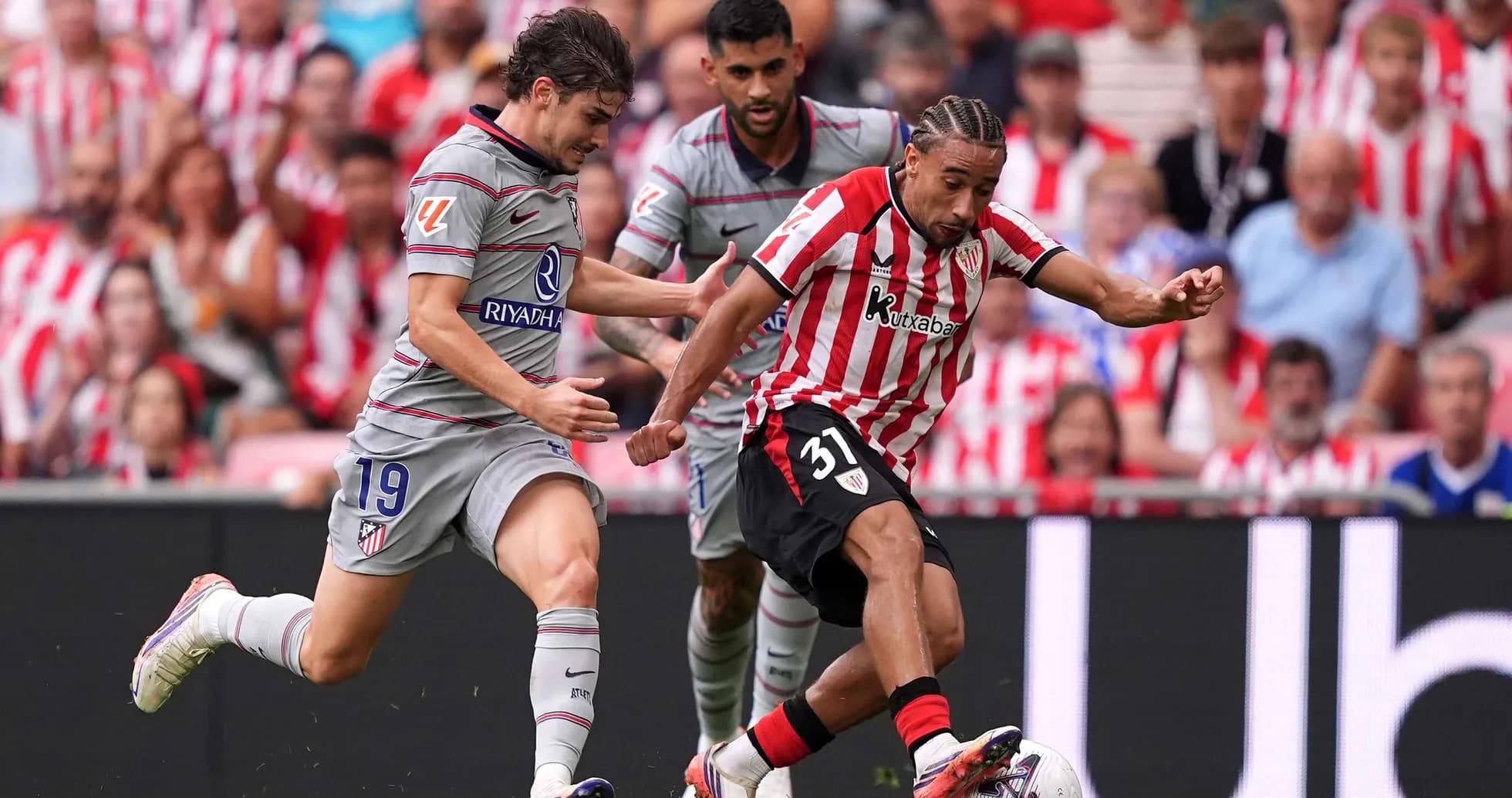
San Mamés under a grey Bilbao sky is rarely just a venue; it is a test of character. On this afternoon in La Liga’s Regular Season - 4, it became a crucible. Athletic Club, in their familiar 4-2-3-1 under Edin Terzić, dismantled Atletico Madrid 3-0, a result that redefines both squads’ early-season narratives.
I. The Big Picture – A statement win against a European contender
Heading into this game, the table painted a tight mid‑table picture. Athletic sat 9th with 6 points, their overall goal difference a slender +1 (6 scored, 5 conceded). Atletico arrived in Bilbao as the nominal favourite: 6th place, 7 points, and the same overall goal difference of +1 (7 scored, 6 conceded), carrying the tag of “ECL Playoffs” contenders.
The underlying numbers hinted at a clash of evolving identities. Athletic’s season to date had been defined by volatility: overall 2 wins and 2 losses from 4 matches, with an attacking profile of 1.5 goals per game in total and 2.0 at home. Atletico’s attack was marginally sharper in total (1.8 goals per game overall), but more balanced between home (2.0) and away (1.5). Defensively, though, the warning lights were clearer for Diego Simeone: Atletico were conceding 2.0 goals per game on their travels, compared to Athletic’s 1.5 conceded at home.
By full time, the raw scoreline – 3-0 to Athletic – turned those hints into a loud declaration. Athletic not only extended their attacking efficiency at San Mamés, they also imposed a clean sheet on a side that had scored 7 times in their first 4 outings.
II. Tactical Voids – Absences that shaped the chessboard
The absentees list mattered. For Athletic, P. Canales (muscle injury) and D. Vivian (hamstring injury) were significant omissions. Without Vivian, Terzić entrusted the heart of his back line to Yeray and Aymeric Laporte, a pairing that had to be both aggressive and calm against Atletico’s fluid front.
U. Egiluz (knee injury) and A. Djalo and N. Serrano (both coach’s decision) further trimmed Athletic’s depth, particularly in defensive and wide rotations. Yet the bench still carried real threat: Gorka Guruzeta, Álex Berenguer, and Maroan Sannadi all waited as impact options.
Atletico’s most notable absence was A. Sorloth with a muscle injury, depriving Simeone of a classic reference point up front. O. Vargas (coach’s decision) was also unavailable, slightly narrowing the attacking variety. In response, Simeone doubled down on technical mobility: a 4-4-2 with Lee Kang-In and Álex Baena listed as forwards, supported by A. Lookman and G. Simeone from the flanks.
Disciplinary profiles framed the emotional tone. Athletic had already lived on the edge this season: their yellow cards were clustered between 46-75 minutes, with a late‑game spike of 42.86% between 61-75, and a red card arriving brutally early in one match, between 0-15 minutes. Atletico, by contrast, were more evenly spread in yellow cards and had seen a red card between 76-90 minutes. This backdrop suggested that as the match wore on, the Basques might lean into controlled aggression while Atletico flirted with late frustration.
III. Key Matchups – Hunter vs Shield, and the battle for the engine room
Hunter vs Shield
The most intriguing attacking profile on Atletico’s side was Álex Baena. With 3 goals and 1 assist in 4 appearances, 6 shots (4 on target), and 10 key passes, he arrived in Bilbao as one of La Liga’s most productive midfield scorers. Opposite him stood an Athletic defence that, heading into this game, had conceded 5 goals in 4 matches overall, with 3 at home – an average of 1.5 per home game.
Terzić’s solution was structural and personal. The back four of Jesús Areso, Yeray, Laporte, and Yuri was protected by a double pivot of Ruíz de Galarreta and Beñat Gerenabarrena. Laporte’s left‑footed distribution and aerial presence, combined with Yuri’s aggression on the flank, allowed Athletic to squeeze the space Baena usually exploits between the lines. Every time Baena tried to drift inside, he met a red‑and‑white cage rather than open channels.
On the other side, Athletic’s own attacking spear was more collective. Robert Navarro, already on 2 league goals with a 7.47 rating, operated as a high‑influence midfielder in the line of three behind I. Williams. Nico Williams and Oihan Sancet completed a fluid trio that constantly rotated positions. Against an Atletico side conceding 2.0 goals per game away from home, this movement was designed to pull apart Marc Pubill and D. Hancko in central defence and isolate Álex Grimaldo and Marcos Llorente in wide defensive duels.
Engine Room – Control vs Disruption
The central duel hinged on how M. Hjulmand and Pablo Barrios could cope with Athletic’s double pivot plus Sancet drifting inside. Atletico’s 4-4-2 out of possession often became a 4-4-1-1, with Lee Kang-In dropping to help. But this also meant longer distances to cover in transition, especially once Athletic broke the first line.
Ruíz de Galarreta, calm and metronomic, dictated the rhythm, while Gerenabarrena provided legs and pressing triggers. Their task was twofold: deny Atletico’s counters through Lee Kang-In – who had already completed 9 successful dribbles from 12 attempts this season – and feed early balls into the half-spaces for Navarro and Nico Williams. Every time Lee tried to turn, one of the pivots stepped in; every time Atletico’s block shifted, Sancet found a pocket between Hjulmand and the centre-backs.
IV. Statistical Prognosis – A result that fits the underlying trends
From a statistical lens, this 3-0 looks less like a shock and more like a convergence of trends. Athletic at home were already scoring 2.0 goals per game and conceding 1.5; Atletico away were scoring 1.5 but conceding 2.0. Amplify that by San Mamés’ intensity and Athletic’s clean-sheet habit (2 clean sheets in 4 overall before this), and a multi‑goal home win with a shutout sits well within the expected range.
Neither side had relied on penalties this season – both had taken none, with zero scored and zero missed – so the outcome was always likely to be decided in open play and structured attacks. Here, Athletic’s 4-2-3-1, used in all 4 of their league matches, showed a level of continuity that Atletico’s shifting between 4-4-2 and 4-1-4-1 had not yet matched.
Following this result, the tactical story is clear. Athletic’s squad, even with key absences, looks coherent, aggressive, and increasingly ruthless at home. Atletico’s, for all its individual quality – Baena’s end product, Lee Kang-In’s dribbling, G. Simeone’s work rate – still feels like a collection of weapons searching for a stable platform. In Bilbao, stability beat volatility, structure beat improvisation, and the scoreboard told the tale: 3-0, and a night when San Mamés roared its approval of a side that suddenly looks built for more than mid‑table.