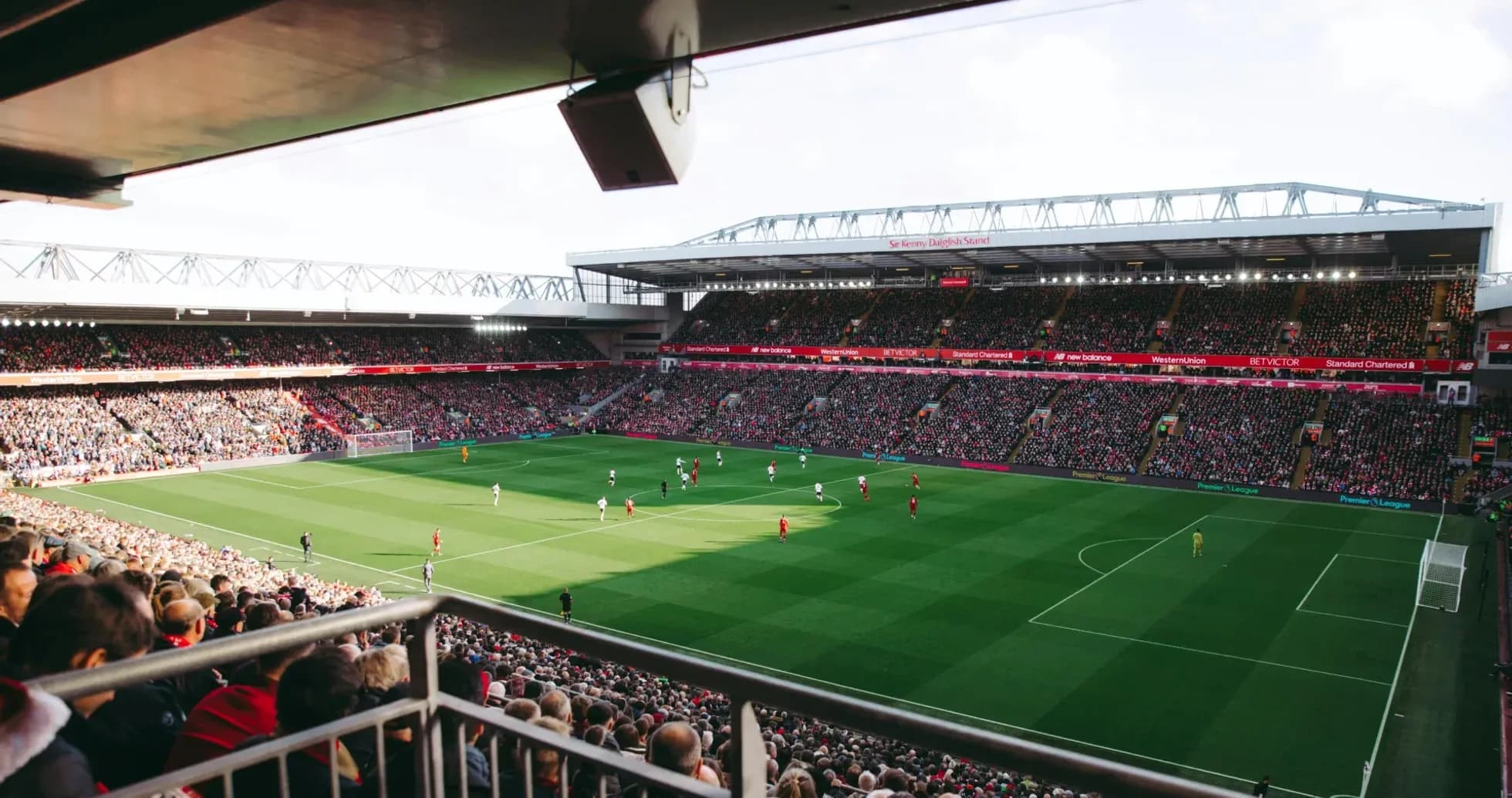
Aston Villa vs Liverpool: Champions League Implications on May 15, 2026
Under the floodlights of Villa Park in Birmingham on 15 May 2026, Aston Villa and Liverpool walk out knowing this is a late‑spring shootout with Champions League implications. Both sides arrive locked on 59 points, separated only by goal difference and fine margins. For Aston Villa, it is a chance to defend a top‑five place and confirm their push in the “Promotion - Champions League (League phase)” bracket; for Liverpool, it is about protecting their own Champions League status while trying to finish above a direct rival in the Premier League’s closing stretch.
Season Context
Aston Villa sit 5th with 59 points from 36 matches, built on 17 wins, 8 draws and 11 defeats. Their goal difference is narrow but positive (50 goals scored, 46 conceded), a reflection of a side that scores at a rate of about 1.4 goals per game while allowing roughly 1.3. Strong at home with 11 wins from 18, Villa know that another big night in Birmingham could cement their place among England’s elite.
Liverpool arrive in 4th place, also on 59 points from 36 games, with an identical W-D-L line of 17 wins, 8 draws and 11 losses. The difference lies in their more potent attack and slightly leakier defence: 60 goals scored and 48 conceded, meaning they average about 1.7 goals for and 1.3 against per match. Their status line is the same — “Promotion - Champions League (League phase)” — but with a superior goal difference of +12, they currently hold the edge in this razor‑thin race.
Form & Momentum
Aston Villa’s recent league form reads “DLLWD”, a run that underlines their inconsistency (1 win in 5) but also their resilience in avoiding total collapse (2 draws in that sequence). Given their season totals of 50 goals for and 46 against in 36 games, Villa remain competitive in almost every contest, but the recent pattern hints at a team that has struggled to turn performances into victories consistently (goal difference only +4).
Liverpool, by contrast, come in with “DLWWW” in the form column, a sequence that speaks to a strong upswing (3 straight wins) after a setback (1 loss and 1 draw). With 60 goals scored across 36 matches, Liverpool’s attack has been more explosive than Villa’s (60 vs 50 goals), even if their defence has conceded slightly more (48 vs 46 goals). That blend of firepower and a broadly similar defensive record gives them a sense of upward momentum heading into Birmingham.
Head-to-Head Patterns
Recent history between these two has been rich in storylines. On 1 November 2025, Liverpool beat Aston Villa 2-0 at Anfield in the Premier League (Premier League, season 2025, November 2025), a controlled home win that underlined their edge on Merseyside. Earlier that same calendar year, on 19 February 2025, the sides shared a 2-2 thriller at Villa Park (Premier League, season 2024, February 2025), with Aston Villa as the home team and Liverpool as the visitors in a match that showcased both attacks. Going back to 9 November 2024, Liverpool again claimed a 2-0 victory over Aston Villa at Anfield (Premier League, season 2024, November 2024), reinforcing a pattern of the Reds finding ways to keep clean sheets while scoring multiple goals in this matchup.
Tactical Preview
Aston Villa’s season profile and lineups data point strongly towards a 4-2-3-1 base, used in 32 league matches, with occasional switches to 4-4-2 (3 times) and a one‑off 4-2-2-2. That primary 4-2-3-1 has helped them reach 50 league goals, supported by creators like M. Rogers, who has 9 goals and 5 assists from midfield (36 appearances, 3195 minutes), and the cutting edge of O. Watkins, who has 12 goals and 2 assists in 35 appearances. With Aston Villa averaging about 1.4 goals per game and conceding 1.3, the structure is balanced but can be exposed when the double pivot is stretched. The absence of Alysson and B. Kamara through injury, plus the questionable status of A. Onana, could thin their options in the attacking and midfield zones, forcing more minutes onto Douglas Luiz, J. McGinn and M. Rogers to control tempo and transitions.
Liverpool are also heavily 4-2-3-1 oriented, using that shape in 32 matches, with tactical wrinkles in 4-2-2-2, 4-3-3 and 4-3-1-2 each appearing at least once. Their 60 goals in 36 games reflect a multi‑source attack: H. Ekitike has 11 goals and 4 assists, C. Gakpo has contributed 7 goals and 5 assists, while D. Szoboszlai has 6 goals and 5 assists alongside a high passing volume (2090 passes at 87% accuracy). However, Liverpool arrive with a significant absentee list: Alisson, C. Bradley, H. Ekitike, W. Endo, G. Leoni and M. Salah are all listed as missing for this specific fixture, with I. Konate and F. Wirtz questionable. Losing both Alisson and M. Salah removes leadership at both ends of the pitch, while H. Ekitike’s absence strips 11 league goals from the front line. That likely increases the creative burden on C. Gakpo and D. Szoboszlai, and could push A. Isak and F. Chiesa into even more central roles in the final third.
Discipline and control in midfield will be crucial. D. Szoboszlai’s mix of 52 tackles, 8 blocks and 29 interceptions shows how central he is to Liverpool’s pressing and ball‑winning, even if he also walks a disciplinary tightrope with 8 yellow cards and one red card. On the Villa side, M. Rogers’ 40 tackles and 13 interceptions highlight his importance in both breaking up play and launching counters. With both sides conceding at roughly 1.3 goals per game, the tactical battle may hinge on which double pivot better protects the back four and who can exploit the half‑spaces behind those screening midfielders.
Statistical Snapshot
- Competition: Premier League, season 2025 — 15 May 2026.
- Venue: Villa Park, Birmingham.
- Prediction: Win or draw — Double chance : draw or Liverpool.
- Win Probabilities: Home 10% / Draw 45% / Away 45%.
- Model: Aston Villa 36.0% — Liverpool 64.0%.
Betting Verdict
The prediction model leans clearly towards Liverpool avoiding defeat, and the “Double chance : draw or Liverpool” angle aligns with both their stronger recent form (“DLWWW”) and their consistent H2H edge at Anfield, even if trips to Villa Park have produced tighter scorelines. Odds across major bookmakers place Aston Villa around 2.85–3.02 for the home win, Liverpool roughly 2.16–2.33 for the away victory, and the draw around 3.40–3.91, suggesting the market sees this as close but with a slight tilt towards the visitors. Given Liverpool’s superior attacking output (60 goals vs Villa’s 50) and stronger last‑five indicators in the predictive data, backing Liverpool on the double‑chance market appears justified, especially when combined with the insurance of the draw. However, Aston Villa’s strong home record and their own Champions League incentive mean any bet should factor in a genuinely competitive contest under pressure.