Arsenal Sets £20 Million Price for Gabriel Jesus
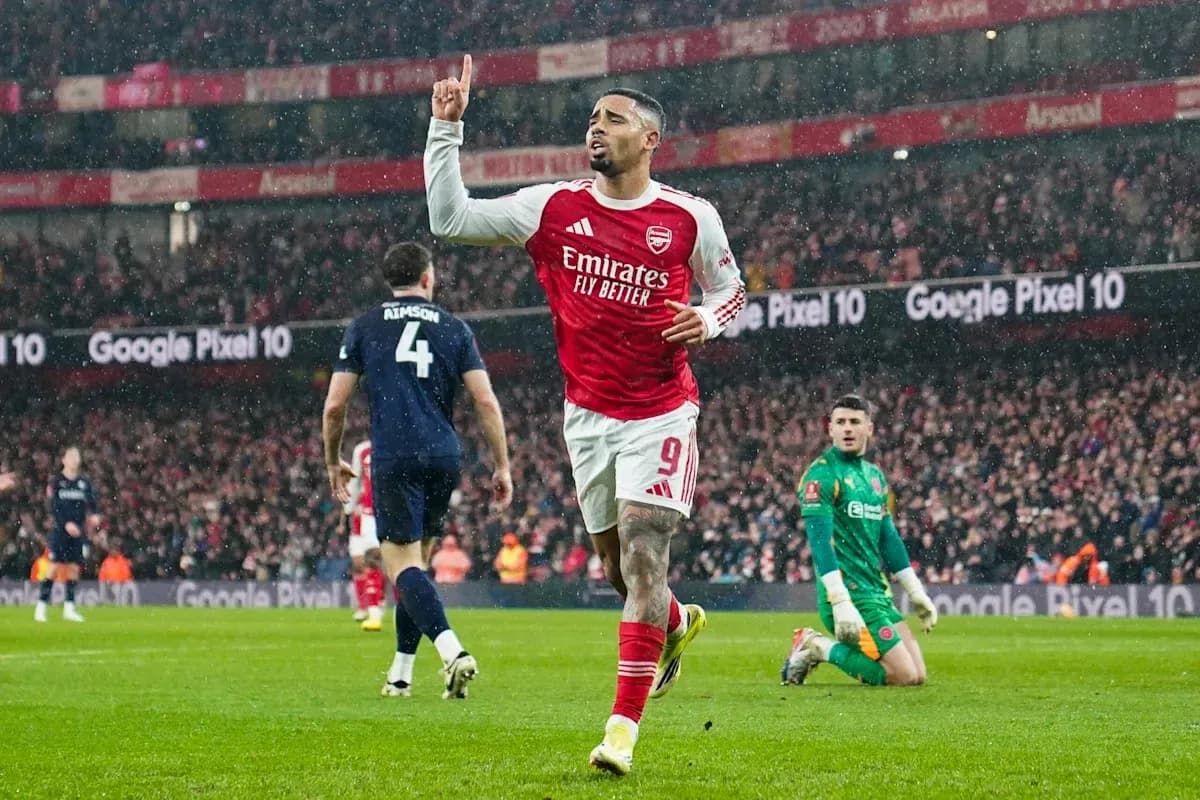
Arsenal have drawn a clear line in this summer’s transfer sand. Gabriel Jesus can go – but only if someone pays close to £20 million.
Reporting from David Ornstein for The Athletic reveals the Premier League champions have set an asking price in the region of £18m to £20m for the Brazilian, with “multiple clubs” sounding out his situation. That figure says as much about Arsenal as it does about Jesus.
This is not a fire sale. It is not sentiment either. It is a champion club acting like one.
A Calculated Valuation, Not a Clearance Tag
Jesus has just 12 months left on his current deal, which runs to June 2027, and Arsenal know what that usually means: leverage drains away, options narrow, and the market starts to circle for a bargain.
They are refusing to play that game.
The message from the Emirates is blunt. They “will not consider selling him cheaply before then.” Even with his injuries, reduced minutes and contract situation, Arsenal still view him as a high-level, tactically sharp forward who understands what it takes to win titles.
They have the evidence to back that up. Since joining in 2022, Jesus has produced 32 goals and 22 assists in 123 appearances. On paper, those numbers are not what you expect from an undisputed No 9 at a club now built to chase Champions League and Premier League trophies every year.
On the pitch, his value has always stretched beyond the stat sheet.
He presses relentlessly. He drags centre-backs into awkward areas. He drifts wide, links play, and injects a kind of emotional edge that managers like Mikel Arteta crave. Arsenal are pricing that whole package, not just his goal column.
Economics, Emotion and a Changing Pechking Order
This is where cold economics collides with squad evolution.
Allowing Jesus to step into the final year of his contract would weaken Arsenal’s negotiating hand. At the same time, Arteta knows the Brazilian still offers something different to his other forwards, even if he is no longer the first name on the team sheet.
Last season underlined the tension. Jesus returned from a serious knee ligament injury and never quite found his old rhythm, yet he still scored six times in 27 outings. One of those was the opener on the final day in the 2-1 win over Crystal Palace – a timely reminder that, even short of his sharpest form, he can tilt big moments.
The problem for him is simple: the landscape has shifted.
With Viktor Gyokeres and Kai Havertz now ahead of him in the striking hierarchy and Jesus starting only three Premier League games this season, the romantic idea of him leading the line every week has faded. Arsenal are champions. Their standards, and their options, have risen.
“Unfinished Business” Meets Harsh Reality
Emotion still lingers around Jesus’ story in north London.
Back in December, when asked about his future and the possibility of leaving, he was clear. He spoke about offers, about questions over Saudi Arabia or a return to Brazil. He admitted he would like to go back to Palmeiras one day.
But he made one thing plain: not yet.
“I feel that I have unfinished business at Arsenal. I don’t want to leave,” he said.
Those words matter to a fanbase that saw him as one of the catalysts for their resurgence. When he arrived from Manchester City alongside Oleksandr Zinchenko, he brought with him the habits of serial winners. Training intensity. Dressing-room demands. A refusal to accept “nearly” as good enough.
He helped turn Arsenal from hopeful challengers into genuine contenders. Supporters felt that shift. They saw a side that pressed harder, attacked quicker and carried a nastier edge when Jesus was fit and firing.
But football doesn’t pause for sentiment. It accelerates past it.
A Sale That Would Feel Pragmatic, Not Cruel
If Arsenal do accept an offer close to £20m, it will look like smart business rather than a ruthless cull.
They would be cashing in on a 29-year-old with one year left on his deal, a notable injury record and a diminished role, while still respecting his pedigree: five English top-flight titles, Champions League experience, and a deep understanding of the Premier League’s demands.
Keep him, and they retain a versatile, experienced forward who can cover multiple roles across a long, unforgiving season. Sell him, and they bank a reasonable fee without devaluing a player who helped drag the club back towards the top.
That is the tightrope Arsenal are walking. No panic. No giveaway. No sentimentality either.
Clubs circling know the numbers and the context. They also know they are not dealing with the old, uncertain Arsenal, vulnerable to pressure and missteps in the market. They are dealing with champions who have set a price and intend to stick to it.
What Comes Next for Jesus?
For many Arsenal fans, Jesus will always be more than a name on a balance sheet. He arrived when belief was fragile and helped restore it. His finishing sometimes infuriated, his injuries often frustrated, but his commitment rarely came into question.
He chased lost causes. He made defenders miserable. At his best, he made Arsenal look like a side that belonged at the very top.
Now comes the hard choice.
Accept a squad role behind Gyokeres and Havertz, or push for a move that restores him as a central figure somewhere else. Arsenal, for their part, have drawn their line: a fair price or nothing.
If a buyer steps up, he will leave a champion club that he helped shape, not one he merely passed through. If nobody does, he stays in a squad built to win again.
Either way, the next move in Gabriel Jesus’ career will say a lot about where Arsenal are going – and just as much about how far they have already come.