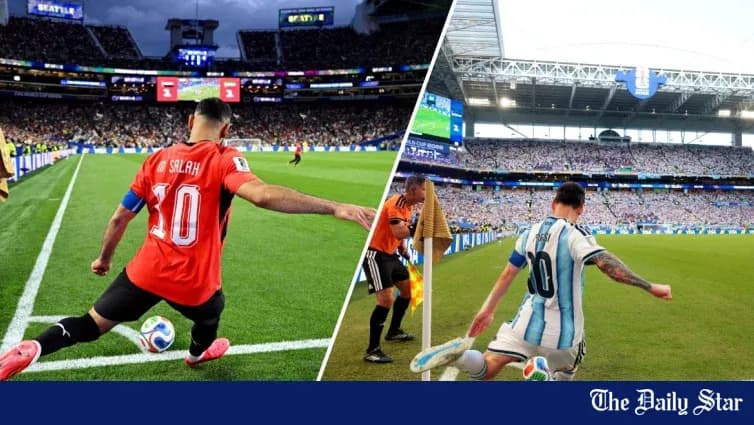
Argentina vs Egypt: World Cup Last-16 Clash
Two left-footed geniuses. Two exhausted squads. One ticket to the World Cup quarterfinals.
On Tuesday in Atlanta, Lionel Messi and Mohamed Salah step into the glare at Mercedes-Benz Stadium, dragging tired legs and the hopes of their nations into a last-16 tie that feels as much about endurance as it does about artistry.
Argentina’s first wobble
Argentina arrive as defending champions, but not untouched. Cape Verde, on World Cup debut, rattled them. Pushed them into extra time. Fired 16 shots at the holders and came within nine minutes of a seismic shock.
Only a cruel twist spared Argentina. Diony Borges sliced into his own net in the 111th minute, a desperate clearance turned match-winner in a 3-2 escape that left more questions than celebrations.
Until that night, Lionel Scaloni’s team had moved through the tournament with the calm of a side that knew its script. Group stage: handled. Control: largely unbroken. Against Cape Verde, that control slipped. Argentina struggled to press, struggled to dictate, and for long stretches looked second best.
Messi did not hide from it. He admitted he was tired and pointed to the team’s failure to press high, a cornerstone of their recent success. It matters because this Argentina leans heavily on him, more than ever. At 38, he has scored seven of their 11 goals at this World Cup, with even an own goal wrapped into a tally that still feels like his personal campaign.
When he tires, the whole structure shudders.
Scaloni’s concerns go beyond his captain. Facundo Medina left the Cape Verde match with severe cramp. Enzo Fernández also cramped up. Nicolás González finished the game hobbling on an ankle problem, with all substitutions already used. The following day’s recovery session offered no comfort: Nahuel Molina, Fernández and Medina could not complete it, even if Medina’s issue has since been played down as simple cramp.
There are options. Nicolás Tagliafico can step in at left-back if Medina is not risked. González, though, remains a significant doubt with a reported ankle sprain, and every missing runner strips away another layer of intensity from Argentina’s press and counter-press.
Egypt smell opportunity
On the other side, Egypt will have watched Cape Verde’s fearless approach with keen interest. The message was clear: this Argentina can be rattled, stretched, forced into uncomfortable spaces.
The Pharaohs do not come to trade punches in the open. They come with organisation. Compact lines. Patience. They will trust their defensive structure, then look to spring Salah and Omar Marmoush on the break, hunting the moments when Argentina’s full-backs are high and their midfield legs slow to recover.
Salah’s fitness hovers over everything. He started the Australia match with a hamstring concern and, across another draining 120 minutes, at times looked reluctant to hit full speed. Even at something below his explosive best, his presence shapes games. One run, one slip inside onto that left foot, and an entire knockout tie can tilt.
Egypt know this stage is rare air. They are in the World Cup last 16 for the first time in 92 years. The weight of that history meets the calm of a group that has just come through its own ordeal: 120 minutes against Australia, a 1-1 draw, then a 4-2 win on penalties. Nerve held. Moment seized.
Masters of the long game
If this tie stretches again, Argentina carry a different kind of history. When World Cup matches go beyond 90 minutes, they almost always find a way. Across all tournaments, they have won 10 of their 12 games that went past regulation, with four settled in extra time and six on penalties.
They are not just champions; they are survivors. They know how to suffer, how to slow a frantic game, how to live inside the tension of a shootout and walk away with their arms raised.
That experience collides with fatigue in Atlanta. Two teams that have already gone the distance now asked to go again on short rest. Recovery sessions become as crucial as tactical briefings. Ice baths matter as much as video analysis.
Messi, at 38, chasing another deep run. Salah, carrying a nation that has waited nearly a century to be here again. One of them will walk off that Mercedes-Benz turf a step closer to the trophy, the other swallowed by the brutality of knockout football.
The winners head to Kansas City on July 11 to face Switzerland or Colombia. The question is simple: whose legs – and whose genius – will last longest?